
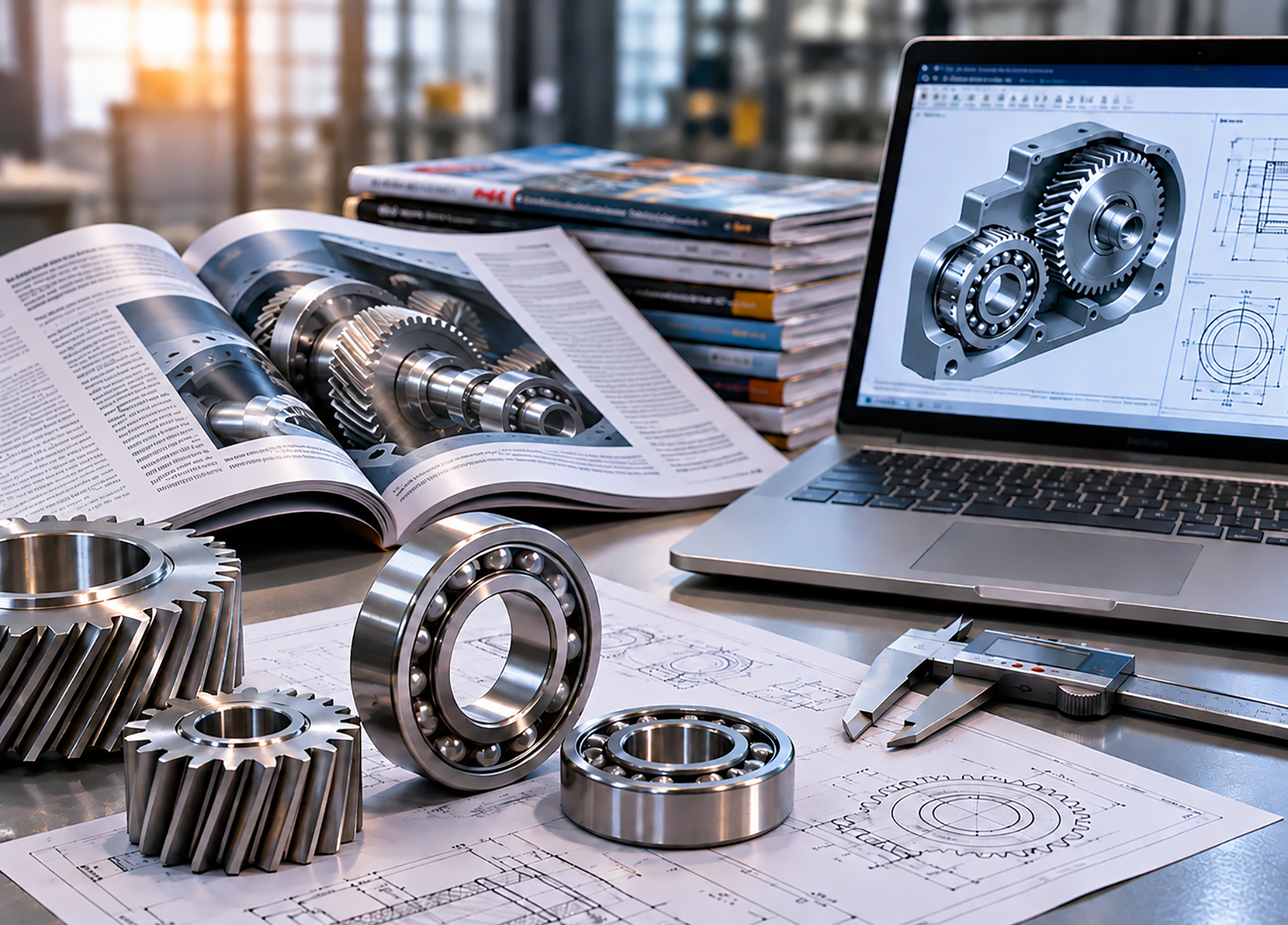
Your company may have valuable technical knowledge that prospective customers would benefit from. The question is: Are you getting that knowledge in front of them?
For manufacturers and industrial companies, trade publications offer an important opportunity to reach engineers, technical buyers, plant managers, and other decision makers who are actively researching products, technologies, and solutions. And unlike traditional advertising, editorial coverage can do more than generate awareness. It can help establish your company as a knowledgeable, credible authority in its field.
The good news is that getting into the trade press isn’t necessarily expensive. In fact, many editorial opportunities are available at no cost, provided you have something worthwhile to contribute.
Trade Publications Need Good Content, Too
Think about why engineers and industrial professionals read trade publications in the first place. They’re looking for information that helps them do their jobs: new technologies, solutions to engineering challenges, product developments, industry trends, and practical applications. Trade publishers need a steady supply of relevant, informative content to keep those readers engaged. While publications have their own editors and writers, many also welcome contributions from manufacturers, engineers, technical specialists, and other industry experts.
This creates a mutually beneficial opportunity. Publications receive valuable content for their audiences, while manufacturers gain exposure to a highly relevant readership and an opportunity to demonstrate their expertise. Of course, there’s an important distinction: Editors are looking for information that serves their readers, not promotional copy that serves the manufacturer. Understanding that difference is often the key to getting published.
There Are More Opportunities Than You Might Think
Trade press today extends well beyond traditional print magazines. Most established industry publications have extensive digital platforms, including websites, newsletters, online resource centers, digital editions, and specialized industry publications. There are several ways manufacturers can participate, and each serves a somewhat different purpose.
Bylined Technical Articles
A bylined article is written by, or attributed to, someone within your company, such as an engineer, product specialist, or technical executive. These articles typically explore an engineering challenge, explain a technology, compare approaches, or provide practical guidance on an industry issue.
For example, a manufacturer of precision flow-control components might contribute an article discussing the factors affecting repeatability in low-flow pneumatic systems. The article could explain engineering principles, discuss application considerations, and illustrate the subject with technical drawings or performance data. The company’s expertise becomes evident through the quality of the information, without the article needing to make a sales pitch.
Many publications accept contributed articles without charging for placement, subject to editorial review and their submission guidelines. For example:
- Machine Design explicitly welcomes educational technical articles and states that accepted contributed articles are published without charge.
- New Equipment Digest accepts educational equipment articles and practical how-to content, with no publication charge for accepted contributions.
- PCI Magazine accepts company press releases free of charge.
- Control Engineering explains its technical feature and editorial calendar opportunities.
- Power Transmission Engineering emphasizes specifications, measurements, and factual product information rather than promotional language.
These examples confirm that free editorial placement is a real opportunity, not simply a theoretical one.
Press Releases and Product Announcements
Press releases provide information about something genuinely newsworthy: a new product, a significant technical advancement, a new manufacturing capability, an expansion, a certification, or another important company development.
Product announcements are particularly relevant in industrial media because engineers want to know about new technologies and components that may solve application problems.
Publications may run these announcements in new-product sections, online news pages, newsletters, or industry updates. Some will publish qualified announcements at no charge, although acceptance, placement, and the amount of coverage are generally at the editor’s discretion.
Editorial Features and Expert Commentary
Trade editors also develop their own feature stories, technology roundups, trend articles, and industry reports. They frequently need knowledgeable sources who can provide technical explanations, application examples, data, or informed perspectives.
Being quoted as an expert in an editorial feature can be especially valuable because your company is contributing to an independent discussion of an important industry topic. Developing relationships with editors and making your technical personnel available as knowledgeable resources can lead to these opportunities over time.
Sponsored Content and Paid Editorial Opportunities
Not every opportunity is free. Many trade publishers offer sponsored articles, advertorials and other paid content programs. These programs typically provide greater control over timing, placement, audience targeting, and distribution. Some also include lead-generation opportunities, such as promoting technical white papers, webinars, or downloadable resources.
Paid content should be clearly identified as sponsored, and it doesn’t carry quite the same independent endorsement as earned editorial coverage. Nevertheless, it can be an effective way to distribute useful technical information to a carefully selected audience.
A well-rounded trade media strategy can incorporate both earned editorial opportunities and paid content distribution, depending on your objectives and budget.
What Makes Technical Content Worth Publishing?
The most important question to ask before submitting an article is not, “What do we want to tell people about our company?” It’s “What does this publication’s audience want or need to know?”
The strongest editorial content addresses a real question, challenge, or area of interest for the reader. It provides useful information, offers technical substance, and helps the audience make more informed decisions.
For an engineering audience, that might include:
- Application-oriented articles explaining how a technology solves a particular engineering or manufacturing challenge.
- Technical comparisons discussing different materials, methods, component designs, or performance considerations.
- Design guidance covering specifications, selection criteria, tolerances, operating conditions, or common engineering mistakes.
- Case studies demonstrating how a real-world problem was addressed, ideally supported by measurable results.
- Technical resources such as engineering drawings, charts, graphs, performance curves, test data, and links to CAD models or other downloadable design information.
Visuals are particularly important. A well-designed technical drawing or performance graph can communicate information more effectively than several paragraphs of explanation. It also gives editors useful supporting material that can make an article more informative and attractive to publish.
The key is substance. Engineers recognize the difference between genuinely useful technical information and marketing claims dressed up in technical language. Our article Content Marketing: How to Build Trust and Generate Leads provides information on how to create effective technical content.
A Product Announcement Is Not a Product Advertisement
This is one of the most important distinctions in trade press.
A product advertisement is designed to persuade someone to buy. It may emphasize superior quality, innovative design, outstanding performance, or why a particular manufacturer is the best choice.
A product announcement, on the other hand, should communicate what’s new, what the product does, how it works, and where it can be applied.
For example, instead of claiming that a new flow-control component offers “unmatched performance and revolutionary design,” a useful announcement might explain its operating pressure range, flow characteristics, materials of construction, available configurations, and the types of applications for which it was developed.
Specific technical facts are far more valuable to engineers than broad promotional claims.
That doesn’t mean your company or product should disappear from the story. The manufacturer should be identified, the product should be clearly described, and readers should have a way to find additional information. But the primary purpose of editorial content is to inform rather than sell. The more useful your information is to the reader, the more valuable it becomes to both the publication and your company.
The Real Value: Building Authority and Trust
There’s another important reason to pursue trade press coverage, and it goes beyond the immediate exposure.
Industrial purchasing decisions often involve extensive research, technical evaluation, multiple decision makers, and long sales cycles. Buyers need confidence not only that a product will perform as expected, but that the manufacturer understands their industry and can provide knowledgeable support. When your company’s engineers and technical experts consistently appear in respected industry publications, you’re demonstrating that expertise to the market.
An engineer who reads a helpful article today may not need your product for another six months. But when that need arises, your company may already be familiar to them as a knowledgeable resource. There’s a real credibility advantage to appearing in a publication your audience already reads and trusts. Independent editorial coverage can reinforce your company’s authority in a way that company-produced promotional materials alone cannot.
Over time, this kind of visibility helps strengthen your brand, builds confidence among prospective customers, and supports the sales process before the first conversation even takes place.
Getting Published Takes More Than Sending a Press Release
Successful trade press outreach requires some planning. Not every publication serves the same audience, and not every type of content is appropriate for every outlet.
The first step is identifying the publications and digital media platforms your prospective customers actually use. A publication serving design engineers may be interested in technical specifications and design considerations, while one targeting plant managers may respond better to articles about reliability, maintenance, efficiency, or production challenges.
It’s also important to review editorial calendars, submission guidelines, and upcoming special features. Many publications plan coverage months in advance and publish editorial calendars identifying topics they’ll be addressing throughout the year. An article that directly supports an upcoming editorial theme may have a better chance of being considered than an unsolicited, unrelated submission.
Before writing a full article, it can also be worthwhile to approach the editor with a concise proposal describing the subject, its relevance to the publication’s audience, and the technical information you can provide. This helps avoid investing time in an article that isn’t a good fit.
And remember that editors need usable material. Well-written copy, accurate technical information, high-quality photography, diagrams, and a knowledgeable contact who can answer follow-up questions all make the editorial process easier.
Don’t Let Valuable Coverage Become a One-Time Opportunity
Getting published is an accomplishment, but the value of that coverage doesn’t have to end when the article appears. A published technical article can be shared through your company’s email newsletters, LinkedIn communications, website news section, and sales follow-up programs. With appropriate permission and attribution, it can also become a valuable reference for prospects evaluating your capabilities.
Your article can also be especially useful to salespeople who need to demonstrate technical expertise without immediately resorting to a sales pitch. Sending a prospect a relevant article from a respected trade publication can be a natural, helpful way to continue a conversation.
And as you build a library of published articles, product announcements, and expert commentary, you create a body of third-party exposure that reinforces your company’s credibility over time.
Your Technical Knowledge Is a Marketing Asset
Most manufacturers already have a wealth of potentially valuable editorial content within their organizations. Their engineers solve problems, evaluate materials, improve processes, develop products, and address application challenges every day. Often, the opportunity isn’t a lack of expertise. It’s recognizing which subjects would interest a broader technical audience, translating that knowledge into compelling editorial content, and getting it in front of the right publications.
ClearImages can help industrial and manufacturing companies identify those opportunities, develop technically accurate and engaging content, prepare the supporting graphics and materials, and coordinate outreach to appropriate trade media. Good trade press coverage isn’t simply about getting your company mentioned. It’s about helping the right audience recognize the knowledge and expertise behind your products—and giving them another reason to trust your company when they’re ready to buy.