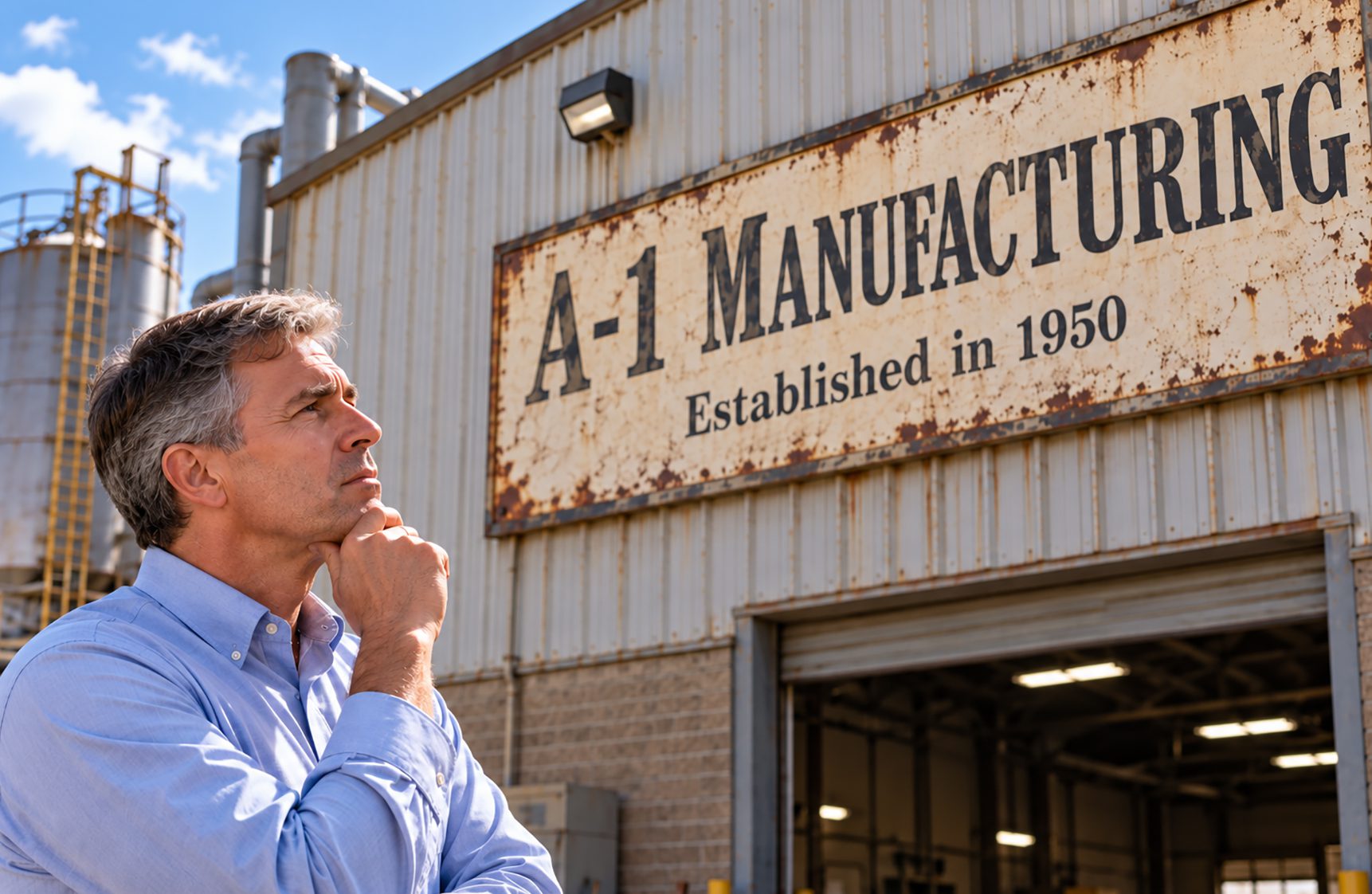
Many industrial companies have a logo that was designed decades ago. Maybe it was the founder’s sketch, or simply something a local printer put together. It has been on every engineering drawing, invoice, truck and trade show booth since. And now, it’s on your website, right alongside the text that claims you are using the latest, most modern technology.
At some point, someone in a management meeting says it out loud: “Our brand looks dated.” Almost immediately, someone else responds: “But everyone knows us by that logo. We can’t throw that away.” Both of them are right. And that tension is exactly why so many manufacturers keep putting off a brand update, sometimes for years longer than they should.
The good news is that it doesn’t have to be a choice between staying dated and starting over. A well-planned rebrand can modernize your company’s image while protecting the recognition you’ve spent years building.
Why Industrial Companies Rebrand
There are several good reasons a manufacturer might need to update its brand:
- The company has outgrown its name or image. “Smith Machine & Tool” may now design and manufacture complete engineered systems.
- A merger or acquisition has brought several companies, logos and identities under one roof.
- New markets. You’re pursuing aerospace, medical or international customers who will judge you against more polished competitors.
- Inconsistency. Different divisions, product lines and sales materials have drifted into a dozen slightly different versions of the “same” brand.
- The look undermines credibility. A precision engineering company whose brand looks outdated sends a mixed message.
That last one matters more than many companies realize. Engineers evaluating suppliers online often form a first impression in seconds. If your brand looks like it hasn’t been touched since fax machines and dial-up modems, prospects may assume the same about your technology.
The Real Risk Isn’t Changing — It’s Changing Carelessly
Industrial brand recognition is built slowly. It’s built through years of trade ads, equipment nameplates, product labels, spec sheets, catalog listings, approved vendor lists and conversations between engineers who have used your products.
That recognition has real value. It’s often called brand equity, and a careless rebrand can throw it away. Imagine a purchasing agent searching an approved-vendor database for your old name. Or a maintenance engineer looking for the familiar logo on a replacement part. Or a longtime customer who receives an email from a company name they don’t recognize and deletes it. Those are the real risks. The goal of a good rebrand is to make sure your market comes along with you.
Evolution vs. Revolution
Not every brand update has to be a complete overhaul. In fact, most industrial companies are better served by evolution rather than revolution.
A brand refresh modernizes what you already have. It might clean up the logo, update the typography, refine the color palette and create consistent standards, while keeping the core elements people recognize.
A full rebrand changes more fundamental elements: the name, the logo concept, the positioning, sometimes all three. It’s the right answer when a company has truly changed what it is, or when the existing brand is actively holding it back.
Think of the well-known industrial brands that have updated their logos several times over the decades. Most of them look more modern today, yet they’re still instantly recognizable. That’s no accident. They changed the presentation while protecting the recognition.
First, Find Out What’s Worth Keeping
Before any design work begins, it pays to understand what your brand actually means in the marketplace, not just what it means internally.
- What do customers, distributors and reps recognize first: the name, the symbol, the color?
- What do engineers associate with your company: quality, a specific technology, responsiveness? This addresses your Brand Message.
- Which visual elements carry real recognition, and which are simply habit? This includes your brand “look and feel”.
The smart way to determine this is to actually conduct surveys. Your salespeople and reps can be a goldmine here. They hear how customers describe you every day. Sometimes you’ll find that a particular color or symbol is far more recognizable than the full logo. Those are the elements to protect in a rebrand.
A Rebrand Is More Than a Logo — It’s an Opportunity
A new logo on top of the same unclear message is just decoration. A rebrand is also an opportunity to sharpen what you want to be known for. What problems do you solve? Which industries do you serve best? What makes you different from the three other suppliers on an engineer’s shortlist?
When the visual identity and the message are developed together, the result is far stronger than either one alone. (We discussed this in more depth in The Power of Positioning in Industrial Marketing.)
Take Inventory of Every Touchpoint
Industrial brands live in a surprising number of places. Before you roll anything out, list them all:
- Website, email signatures, LinkedIn and online directories
- Product nameplates, labels and packaging
- Data sheets, manuals, catalogs and CAD title blocks
- Trade show booths, signage, vehicles and uniforms
- Quotes, invoices and purchase order forms
- Distributor catalogs and partner websites
That list helps you budget realistically. It also prevents the most common rebranding problem: three different versions of your logo still circulating three years later.
Plan the Rollout — Don’t Just Flip a Switch
The most successful rebrands are planned, phased and communicated.
Start with the most visible, highest-impact items, usually the website, sales materials and trade advertising. Then work through the rest according to a schedule, often replacing printed materials and labels as existing stock runs out. Clear brand guidelines make sure everyone, from your marketing team to your sign vendor, applies the new identity correctly. A Brand Standards Manual becomes a valuable tool to ensure consistency across every brand application.
And don’t forget the digital details. Old company names should remain searchable on your website for a while. Old URLs should redirect properly. Directory listings and Google Business profiles need updating. These small items protect the search visibility you’ve already earned.
Tell Your Market Before They Notice
Here’s where many companies miss an opportunity. A rebrand isn’t just a change. It’s news. Announce it to your customers, distributors and reps first, so they hear it from you and not from a confusing invoice. Explain why you’re making the change, especially if it reflects growth, new capabilities or a merger. Use a “formerly known as” transition period where the name is changing. Send an announcement email, issue a press release to trade publications and consider a launch ad campaign.
Handled well, the message to your market is simple and positive: “Same company. Same people. Same engineering. A brand that reflects who we are today — and where we are going.”
A Special Note on Mergers and Acquisitions
When companies combine, branding decisions become more complex. Should every company take the parent’s name? Should the acquired brand stay, with an endorsement such as “XYZ, an ABC Company”? Should strong product brands remain separate?
There’s no single right answer. It depends on where the recognition and customer loyalty actually live. But it is a decision worth making deliberately, rather than letting the market sort out a patchwork of logos on its own.
Consistency Is What Turns a New Brand Into Recognition
A new brand doesn’t build recognition on launch day. It builds recognition the same way your original brand did: through consistent, repeated exposure over time. That means applying it consistently on every touchpoint and keeping it in front of your market through your website, advertising, email and content. (For more on why this matters, see Why Branding Matters in Industrial Marketing.)
Ask yourself: If a new engineer saw our logo next to our top three competitors’ today, which company would look most capable? If you hesitate, let’s talk. At ClearImages, branding is at the core of what we do as a creative agency for industrial companies. We help manufacturers evaluate their existing brand equity, decide between a refresh and a full rebrand, develop the identity and messaging, and carry it consistently through websites, sales materials, trade show exhibits and advertising. Our goal is to make sure your company looks as capable as it actually is, without losing the recognition you’ve worked so hard to earn.